


Laser's Precision and Simplicity Could Revolutionize Cataract Surgery
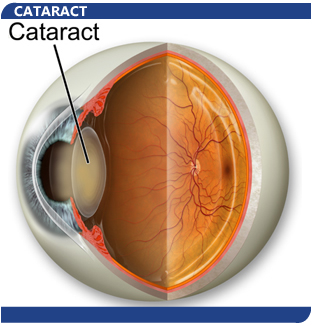
Two new studies add to the growing body of evidence that a new approach to Cataract surgery may be safer and more efficient than today's standard procedure. The new approach, using a special femtosecond laser, is FDA-approved, but not yet widely available in the United States. It's one of the hottest topics this week at the 115th Annual Meeting of the American Academy of Ophthalmology.
Research reported Oct. 23 by William W. Culbertson, MD, of the Bascom Palmer Eye Institute at the University of Miami School of Medicine, and by Mark Packer, MD, of Oregon Health and Sciences University, confirms several advantages of laser Cataract surgery.
Laser Lens Fragmentation Boost Safety by Reducing Need for Ultrasound
Dr. Culbertson's team studied how pre-treating Cataracts with the femtosecond laser affected the level of ultrasound energy needed to soften the Cataracts. This emulsification is performed so that the Cataracts can be easily suctioned out. Surgeons want to use the lowest possible level of ultrasound energy, since in a small percentage of patients it is associated with slower recovery of good vision after surgery and/or problems with the cornea, which is the clear outer layer of the eye. Ideally, in appropriate cases, ultrasound use would be eliminated altogether.
In Dr. Culbertson's prospective, randomized study, 29 patients had laser Cataract surgery with a femtosecond laser in one eye and the standard Cataract procedure, called phacoemulsification, in the other. Laser surgery included: a laser capsulotomy, which is a circular incision in the lens capsule, followed by laser lens fragmentation, then ultrasound emulsification and aspiration. Lens fragmentation involved using the laser to split the lens into sections and then soften it by etching cross-hatch patterns on its surface. Standard surgery included a manual incision, followed by ultrasound emulsification and aspiration. After Cataract removal by either method, intraocular lenses were inserted into eyes to replace the natural lens and provide appropriate vision correction for each patient.
The use of ultrasound energy use was reduced by 45 percent in the laser pre-treated eyes compared with the eyes that received the standard cataract surgery procedure. Also, surgical manipulation of the eye was reduced by 45 percent in eyes that received laser pre-treatment as compared to manual standard surgery. This study involved the most common types of cataracts, those graded 1- 4. Dr. Culbertson notes that these findings may not apply to higher grade cataracts.
"In clinical practice, surgeons would expect safer, faster cataract surgery when laser pre-treatment is performed before cataract removal," said Dr. Culbertson. "The combination of precision and simplification that is possible with the femtosecond laser represents a major advance for this surgery."
Laser Lens Fragmentation Protects Corneal Endothelial Cells
Dr. Packer's team at the Oregon Health and Sciences University in Portland, Oregon, assessed the safety of laser cataract surgery in terms of loss of corneal endothelial cells, as measured after cataract surgery. Measuring endothelial cell loss is one of the most important ways to assess the safety of new cataract surgery techniques and technology. These cells preserve the cornea's clarity, and since they don't regenerate, they must last a lifetime. Dr. Packer's study found that when laser lens fragmentation was used in 225 eyes, there was no loss of endothelial cells, while the 63 eyes that received standard treatment had cell loss of one to seven percent.
"Our finding, that laser lens fragmentation appears to protect corneal endothelial cells, represents a significant benefit of this new surgery," said Dr. Packer. "This procedure is safer than standard cataract treatment and is likely to mean better vision and fewer eye health concerns for cataract patients, over the long term."
Earlier studies of femtosecond laser cataract surgery found other benefits. The laser allows the surgeon to make smaller, more precise incisions and to perform improved capsulotomies, which is the removal of part of the lens capsule that make intraocular lens (IOL) placement more secure. This reduces the chance that an IOL will later become displaced. Also, laser cataract surgery appears to improve results in patients who opt for advanced technology IOLs, plus corrective corneal incisions, to achieve good all-distance vision.
Femtosecond lasers have been used by ophthalmologists for years in refractive surgery such as LASIK, in-corneal transplants, and in other procedures. In 2009, a new type of femtosecond laser that could reach deep enough into the eye to be used in cataract removal was approved by the FDA. In addition to Dr. Culbertson's and Dr. Packer's presentations, key sessions on the topic at the Academy's 2011 Annual Meeting include a special session in the Sunday afternoon program, Spotlight on Femtosecond-Assisted Cataract Surgery: The Tough Questions, Femtosecond Laser Cataract Surgery: the Future,a video presentation,and two new instruction courses.
http://www.sciencedaily.com/releases/2011/10/111023135653.htm
Story Source:
The above story is reprinted from materials provided by American Academy of Ophthalmology.
Note: Materials may be edited for content and length. For further information, please contact the source cited above

No comments:
Post a Comment